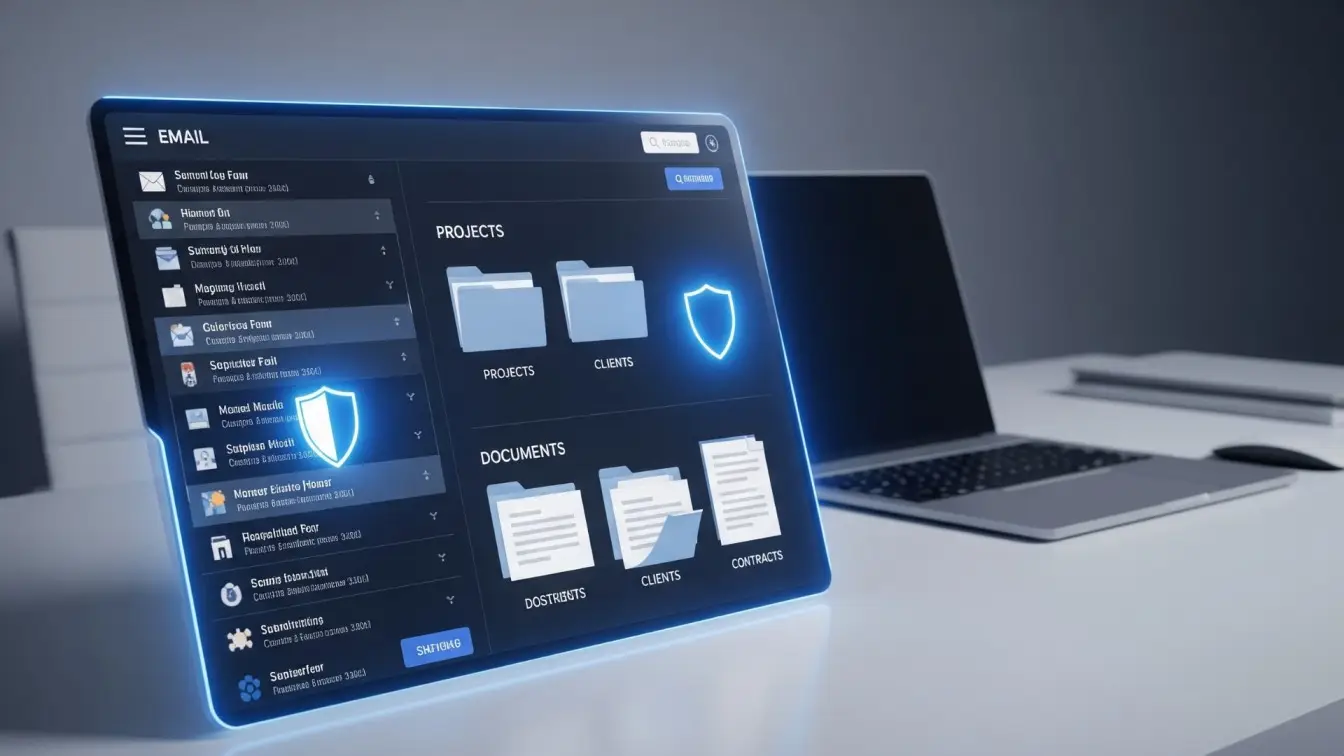
Email Document Management: 7 Smarter Ways to Control, Secure, and Scale Business Email
What Email Document Management Really Means Today
Email is still the most trusted and widely used business communication tool. Contracts are approved by email. Financial decisions are confirmed by email. Customer commitments are made by email. Yet in many organizations, these critical records remain scattered across personal inboxes.
Email Document Management is the disciplined approach of capturing business emails and their attachments, classifying them as official records, and storing them securely in a centralized system where they can be searched, protected, and audited.
Unlike basic email archiving, Email Document Management focuses on context, control, and compliance. It ensures that emails are treated with the same importance as formal documents because in practice, they often are.
Why Email Still Deserves Structured Management
Despite the rise of collaboration platforms, email remains legally recognized, universally accepted, and deeply embedded in workflows. Most external communication with customers, suppliers, regulators, and partners still happens via email.
The challenge is volume and risk. Employees send and receive hundreds of emails each week. Without structure, valuable knowledge is lost, sensitive data is exposed, and compliance becomes almost impossible to prove.
Email Document Management brings order to this chaos by turning unstructured messages into governed business assets.
How Email Document Management Works in Practice
Modern systems integrate directly with email platforms such as Microsoft Outlook and Gmail. Instead of forcing users to change how they work, the system operates quietly in the background.
Emails are automatically:
Captured based on rules or policies
Classified using metadata such as sender, project, or case number
Stored in a secure repository alongside related documents
Indexed for fast search and retrieval
The result is a complete, defensible record of business communication.
7 Smarter Ways Email Document Management Improves Business
1. Smarter Control Over Business Critical Information
When emails stay in inboxes, control stays with individuals. When employees leave, information leaves with them.
Email Document Management centralizes ownership of business correspondence. Emails related to clients, projects, or transactions are stored where the organization, not the individual, retains control.
This ensures continuity, transparency, and institutional memory.
2. Smarter Search That Saves Real Time
Searching inboxes is inefficient and unreliable. Employees waste hours looking for old messages, attachments, or approvals.
With Email Document Management, emails become searchable records. Users can locate information by keyword, date, sender, customer name, or related document often in seconds.
Over time, this translates into measurable productivity gains across teams.
3. Smarter Security for Sensitive Data
Emails frequently contain:
Financial data
Personal information
Legal advice
Intellectual property
Leaving this data in inboxes exposes it to accidental deletion, forwarding, or unauthorized access.
Email Document Management applies enterprise-grade security, including access controls, audit trails, and encryption. Sensitive emails are protected according to policy, not individual behavior.
4. Smarter Compliance With Regulations
Many industries are required to retain electronic communications for specific periods. Regulators and courts expect organizations to produce complete and accurate email records on demand.
Email Document Management supports compliance by:
Enforcing retention schedules
Preventing unauthorized deletion
Preserving original message integrity
Supporting audits and eDiscovery
This reduces legal risk and demonstrates governance maturity.
5. Smarter Collaboration Across Teams
Important emails often relate to shared work projects, cases, or customers. When those emails sit in one person’s inbox, collaboration suffers.
By storing emails alongside related documents, teams gain shared visibility. Everyone works from the same information, reducing miscommunication and duplicated effort.
This is especially valuable in remote and hybrid environments.
6. Smarter Integration With Business Systems
Email does not exist in isolation. It connects to CRM systems, ERP platforms, and document repositories.
Modern Email Document Management solutions integrate seamlessly with these systems, linking emails directly to customers, transactions, or records. Providers like Antasis focus on embedding email governance into broader information management strategies.
Learn more here: https://antasis.com/email-document-management/
7. Smarter Long-Term Cost Reduction
While Email Document Management is an investment, it reduces costs over time by:
Lowering legal discovery expenses
Reducing data storage sprawl
Minimizing compliance penalties
Improving employee efficiency
Organizations gain predictability and control instead of reacting to crises.
Email Document Management vs Basic Email Archiving
Email archiving focuses on storage. Email Document Management focuses on value and governance.
Feature | Email Archiving | Email Document Management |
Purpose | Storage | Records management |
Search | Basic | Advanced, contextual |
Compliance | Limited | Policy-driven |
Integration | Minimal | Deep business integration |
Governance | Passive | Active and auditable |
For organizations with regulatory, legal, or operational complexity, archiving alone is no longer sufficient.
Industry Use Cases Where Email Management Matters Most
Legal and Professional Services
Emails often form part of the official case record. Managing them properly ensures confidentiality, traceability, and defensibility.
Finance and Accounting
Approvals, confirmations, and audit evidence frequently arrive by email. Centralized management supports transparency and compliance.
Healthcare and Life Sciences
Patient communications and regulatory correspondence must be securely stored and easily retrievable.
Best Practices for Successful Implementation
Define clear policies for which emails are records
Automate capture wherever possible
Keep the user experience simple
Train employees on governance basics
Review and refine rules regularly
Email Document Management works best when governance is built into daily workflows, not added as an afterthought.
Frequently Asked Questions (FAQs)
Is Email Document Management the same as email backup?
Do employees need to manually file emails?
Are stored emails legally admissible?
Can small businesses benefit from Email Document Management?
Does it replace existing email platforms?
How long does deployment take?
Conclusion
Email is not just communication it is evidence, knowledge, and business memory. Treating it casually creates risk. Managing it intelligently creates control.
By adopting Email Document Management, organizations gain security, compliance, efficiency, and confidence. The smarter approach is no longer optional; it is essential for modern, regulated, and growing businesses.