What Is Business Process Outsourcing (BPO)? The Complete 2026 Guide
Ask five business owners what business process outsourcing means and you will get five different answers. Some picture a call centre. Others think of payroll processing, data entry, or an offshore IT helpdesk. All of them are right- and that is exactly why BPO deserves a clearer explanation. This guide covers what BPO actually is, how it works in practice, the main types, the genuine benefits and risks, and how to decide whether it is right for your business in 2026.
BPO, Defined Simply
Business process outsourcing (BPO) is the practice of contracting a specialist third-party provider to run one or more of your business processes on your behalf. Instead of hiring, training, and managing an in-house team for a function such as customer support, order processing, or payroll, you delegate that function to a partner whose entire business is running it well.
The key phrase is process, not project. A design agency building your website is a vendor. A BPO partner answering your customer calls every day, at agreed service levels, month after month, is running a process- and is measured on ongoing outcomes such as response times, resolution rates, and customer satisfaction scores.
The Main Types of BPO
By function: front office vs back office
Front-office BPO covers everything customer-facing. Inbound customer service, outbound engagement and sales calls, technical helpdesk, live chat, email support, and customer experience management all sit here. These are the processes your customers directly feel, which is why service quality and language capability matter so much.
Back-office BPO covers the internal engine of the business: data entry and encoding, order and data processing, email and document management, HR administration, payroll processing, and virtual assistant support. Customers never see these processes, but they feel the effects immediately when they go wrong- a late salary run or a mis-keyed order damages trust just as fast as a bad phone call.
By location: onshore, nearshore, and offshore
- Onshore- your provider operates in the same country as you. Highest cost, simplest alignment on language, time zone, and regulation.
- Nearshore- your provider operates in a nearby country or region, typically within one to three time zones. A popular balance of cost savings and working-hours overlap- for example, a Singapore business working with delivery teams in Malaysia, the Philippines, Vietnam, or Indonesia.
- Offshore- your provider operates in a distant region. The largest cost savings, best suited to processes that do not require constant real-time collaboration, or that benefit from follow-the-sun coverage.
By specialisation: KPO and ITO
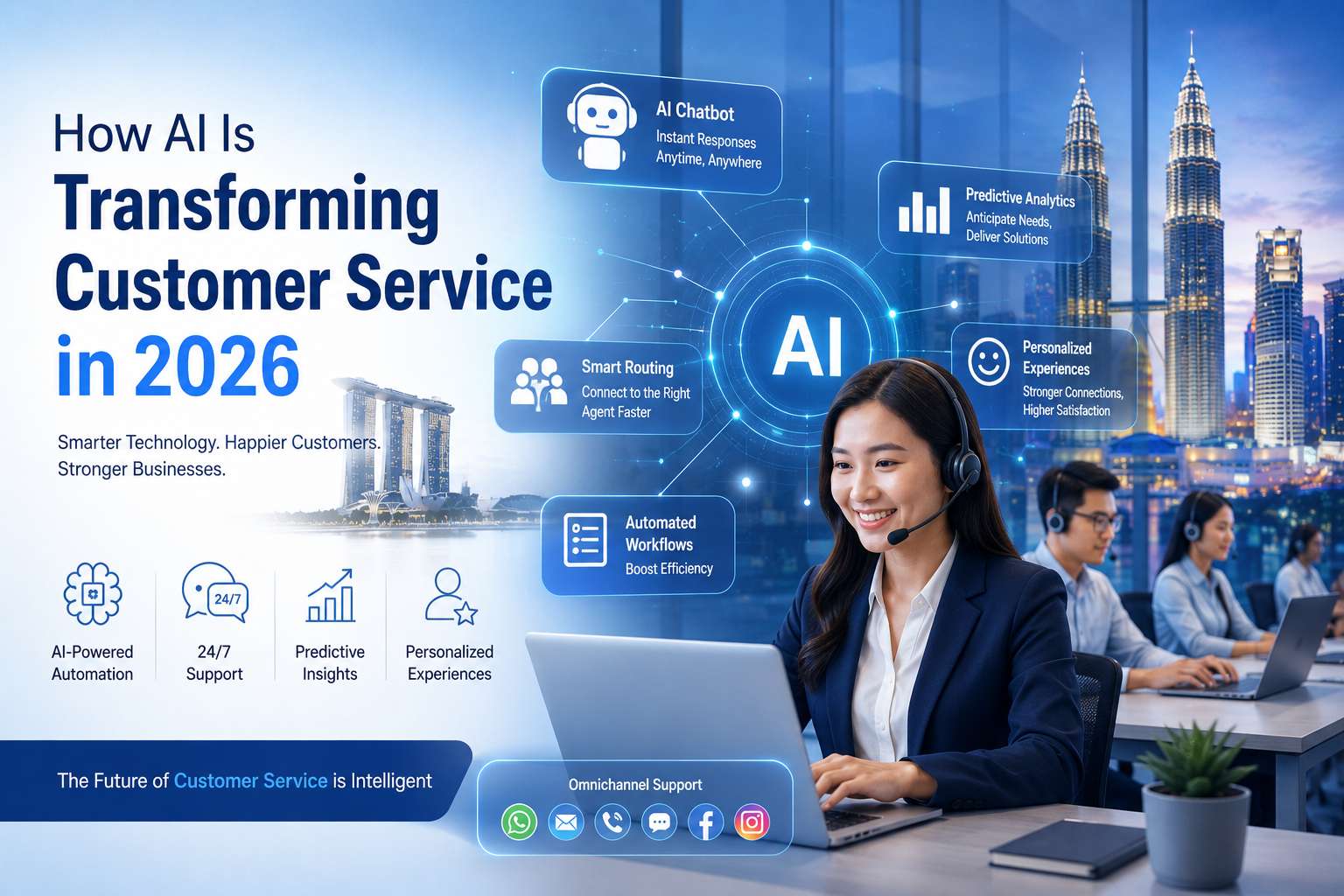
Two cousins of classic BPO are worth knowing. Knowledge process outsourcing (KPO) covers judgement-heavy work such as research, analytics, and business intelligence. Information technology outsourcing (ITO) covers IT-specific functions such as infrastructure support, technical helpdesk tiers, and application maintenance. Many modern providers, including Antasis, blend all three- for example combining a customer support operation with real-time analytics and CRM implementation.
How a BPO Engagement Actually Works
A well-run engagement follows a predictable arc. First comes discovery: the provider maps your current process, volumes, peak patterns, systems, and pain points. Second is solution design: team size, coverage hours, languages, escalation paths, tools, and- critically- the service level agreement (SLA) that defines what good looks like in measurable terms. Third is transition: knowledge transfer, agent training, system access, and a pilot period. Finally comes steady-state operations, governed by regular reporting on the KPIs agreed in the SLA, such as first call resolution, average handle time, CSAT, and accuracy rates.
The best engagements treat the SLA as a floor, not a ceiling. Continuous improvement- spotting recurring issues, feeding insight back to the client, automating repetitive steps- is where an outsourcing relationship graduates from cost saving to genuine competitive advantage.
The Benefits: Why Businesses Outsource in 2026
- Cost efficiency- you convert fixed headcount cost into a flexible operating expense, and you avoid recruitment, training, facilities, software licensing, and management overhead. Savings of 30–50% on fully loaded process cost are common, depending on function and location.
- 24/7 coverage without night shifts- a distributed provider covers all time zones, so customers in different regions get live support without you running an overnight rota.
- Instant scalability- seasonal peaks, product launches, and promotional surges can be absorbed by flexing the outsourced team up and down- something an in-house team can rarely do at speed.
- Access to specialist skills- multilingual agents, trained technical support tiers, compliance-aware payroll specialists, and AI-enabled tooling come as standard from a mature provider, without a hiring campaign.
- Management focus- leadership time stops going into rostering and quality-checking routine processes, and goes back into product, sales, and strategy.
The Risks- and How Good Providers Neutralise Them
Honest conversations about BPO must include the risks. Loss of direct control is the most cited concern: you are trusting someone else with your customers or your data. Quality inconsistency, cultural or language mismatch, data security exposure, and hidden costs from vague contracts are the others.
Each risk has a known antidote. Control is preserved through transparent, real-time reporting and clearly owned escalation paths. Quality is protected by SLAs with teeth, calibrated QA scoring, and a named account manager. Security is addressed through certifications, access controls, encryption, and compliance with regional data protection laws such as Singapore’s PDPA. Cost surprises are prevented by pricing models that are explicit about what is included- per-hour, per-seat, or custom arrangements agreed up front. The presence or absence of these mechanisms is the fastest way to tell a professional provider from a cheap one.
What Should You Outsource First?
The classic starting rule: outsource processes that are high-volume, rule-based, and well-documented, and keep processes that are strategic, judgement-intensive, or core to your differentiation. In practice, the most common first moves are inbound customer service, technical helpdesk, data entry, and order processing- functions where a specialist provider can hit measurable service levels within weeks.
A useful second filter is pain: if a process is regularly dropping balls- missed calls, backlogged emails, delayed payroll- the case for handing it to a dedicated team is already made, whatever the spreadsheet says.
BPO Trends Shaping 2026
Three shifts are redefining what buyers should expect from a modern provider. The first is the AI-human hybrid becoming the default operating model: conversational AI platforms and virtual agents now absorb routine volume as standard, with trained humans handling escalation- buyers should treat this blend as included capability, not a premium tier. The second is the move from cost conversations to experience conversations: procurement teams that once asked only ‘how much per seat?’ now ask about CSAT commitments, first-call resolution, and the provider’s contribution to retention, because the market has learned that cheap, bad support is the most expensive kind. The third is regionalisation: rather than concentrating delivery in one country, businesses increasingly prefer multi-country footprints that combine language depth, time-zone coverage, and built-in continuity.
A fourth, quieter trend deserves mention: outcome-based pricing. A growing share of contracts tie a portion of provider compensation to results- resolution rates, satisfaction scores, accuracy- rather than pure inputs like hours or seats. Providers confident in their delivery welcome this structure; it aligns incentives and turns the SLA from a compliance document into a shared scoreboard. When evaluating providers in 2026, willingness to discuss outcome-linked terms is a strong signal of operational maturity.
Common Mistakes First-Time Outsourcers Make
- Outsourcing a broken process- if a workflow is chaotic in-house, moving it offshore relocates the chaos. Fix or document the process first- or explicitly hire the provider’s transition team to do so.
- Choosing on price alone- the lowest quote usually excludes QA, reporting, or account management. The gap reappears later as quality failures that cost more than the saving.
- Under-investing in the first 90 days- knowledge transfer is a joint project. Providers cannot absorb what clients do not share, and early neglect shows up as months of mediocre performance.
- Skipping the governance rhythm- engagements drift without scheduled reviews. A weekly operational call and a monthly business review are the minimum heartbeat of a healthy partnership.
Frequently Asked Questions
What is the difference between BPO and outsourcing?
Outsourcing is the broad practice of using external providers for any work. BPO specifically refers to outsourcing entire ongoing business processes- such as customer support or payroll- rather than one-off projects or tasks.
Is BPO only for large enterprises?
No. Flexible pricing models such as per-hour and per-seat plans have made BPO accessible to SMEs. Many small businesses start with a single shared-agent arrangement and scale up as they grow.
How much does BPO cost?
It varies by function, location, and coverage hours. Entry points in Southeast Asia commonly start from around US$19 per hour for shared support or fixed monthly per-seat rates for dedicated agents, with custom pricing for enterprise volumes.
Does outsourcing mean losing control of quality?
Not with the right structure. A well-drafted SLA, real-time performance dashboards, regular business reviews, and a dedicated account manager give many businesses better visibility of outsourced processes than they had of their own in-house operation.
Which processes should never be outsourced?
Anything that defines your competitive edge- core product decisions, brand strategy, and key relationships- should stay in-house. Everything operational around them is a candidate.
Ready to get started? Antasis has delivered BPO and customer experience solutions across Southeast Asia for over 20 years, handling more than 10 million calls annually from delivery centres in Singapore, Malaysia, the Philippines, Vietnam, and Indonesia. Schedule a free consultation at antasis.com/contact-us to map which of your processes could be running better, for less, within 30 days. |
Contact Antasis
Ready to explore how outsourcing can work for your business? Reach the Antasis team directly:
Email | sales@antasis.com |
Singapore HQ | Blk 162 Bukit Merah Central #06-3545, Singapore 150162 |
Singapore | +65-6319-2620 |
Philippines | +63-920-619-1194 |
Malaysia | +60-7587-9041 |